
How to boost confidence in sports is a question that every athlete, from the budding junior at a local Brisbane club to the seasoned pro on the world stage, has asked themselves at a critical moment in their career. Confidence is the invisible "X-factor" that transforms a talented player into a champion. It is the fuel that allows you to take the winning shot when the clock is ticking down or to hold your line in a high-speed rugby tackle. Without it, even the most physically gifted athletes can find themselves paralyzed by doubt.
At Team Spirit Sports, we recognize that confidence is a muscle that needs as much training as your quads or your cardio. While our mission is to provide you with the world-class gear that makes you look the part, our vision is to see you feel the part. In this extensive guide, we will break down the science of self-belief, provide actionable mental drills, and show you how to build a fortress of confidence that no opponent can breach.
The Science of Self-Belief: Why Confidence Is Your Greatest Asset
Before we dive into the "how," we must understand the "what." In sports psychology, confidence is often referred to as "self-efficacy", a term coined by psychologist Albert Bandura. It is the specific belief in your ability to execute a task successfully in a specific situation.
The Self-Efficacy Model
Self-efficacy isn't just "positive thinking"; it is a calculated mental state derived from four primary sources:
- Past Performance: Your history of success.
- Vicarious Experiences: Seeing people similar to you succeed.
- Social Persuasion: Encouragement from coaches and teammates.
- Physiological States: How you interpret your nerves and heart rate.
Understanding how to boost confidence in sports starts with identifying which of these sources is currently your weakest link. If you are coming back from an injury, your "past performance" bank might feel empty, requiring you to lean more heavily on "social persuasion" and "vicarious experiences."
The Yerkes-Dodson Law: Finding Your Peak
Confidence is closely tied to arousal levels. The Yerkes-Dodson Law states that performance increases with physiological or mental arousal, but only up to a point. When arousal becomes too high (anxiety), performance drops.
To master how to boost confidence in sports, you must learn to stay in the "Optimal Arousal" zone. Too much confidence can lead to complacency, while too little leads to "choking." The goal is a balanced state of "Quiet Confidence."
Mastering Preparation: The Foundation of Unshakable Faith
The most sustainable way regarding how to boost confidence in sports is through meticulous preparation. There is no mental trick that can replace the confidence earned through sweat and repetition.
The 10,000-Hour Myth vs. Deliberate Practice
While the "10,000-hour rule" is famous, the quality of practice matters more than the quantity. Deliberate practice, where you focus on your weaknesses and push just beyond your comfort zone, builds a deep reservoir of muscle memory. When you have done a skill 5,000 times in training, your brain doesn't need to "wonder" if you can do it during a game; it knows.
Physical Fitness as a Mental Shield
Physical weakness is the breeding ground for doubt. When you are tired, your brain looks for excuses to quit. By reaching peak physical condition, you remove one of the biggest hurdles to self-belief. Knowing you are the fittest player on the field is a massive component of how to boost confidence in sports. It gives you the "mental permission" to be aggressive in the final minutes of a match.
Mental Rehearsal: Using Visualization to Pre-Win the Game
Visualization, or mental imagery, is a cornerstone of how to boost confidence in sports used by elite Olympians and professional athletes worldwide. Your brain struggles to distinguish between a vividly imagined event and a real one.
The PETTLEP Model of Imagery
For visualization to be effective in learning how to boost confidence in sports, it must be realistic. Sports psychologists use the PETTLEP acronym:
- Physical: Imagine yourself in your gear, feeling the weight of the ball.
- Environment: Visualize the specific court or field.
- Task: Focus on the specific movements.
- Timing: Imagine the play in real-time.
- Learning: Adapt the imagery as your skills improve.
- Emotion: Feel the excitement and the nerves.
- Perspective: See it through your own eyes.
By "playing" the game in your mind every night, you arrive at the actual venue feeling as though you have already won. This familiarity is a primary driver in how to boost confidence in sports.
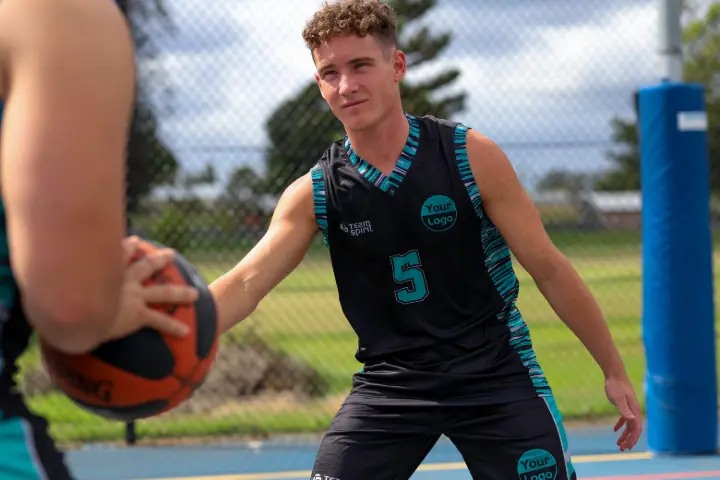
The Power of Internal Dialogue: Flipping the Script
Every athlete has an internal monologue. For many, that voice is a critic. Learning how to boost confidence in sports requires you to turn that critic into a coach.
Cognitive Reframing: Nerves vs. Excitement
Physiologically, the feeling of being "nervous" and being "excited" is almost identical: sweaty palms, racing heart, and butterflies in the stomach.
- The Negative Frame: "I'm nervous, I'm going to fail."
- The Confidence Frame: "My body is preparing for battle. I am excited and ready to explode."
This simple shift in perspective is a powerful tool in how to boost confidence in sports. It changes your physiological state from a threat response to a challenge response.
Affirmations vs. Instructional Self-Talk
While "I am the best" (affirmation) can help, "Stay low, follow through" (instructional) is often more effective for boosting confidence in the heat of the moment. Instructional self-talk keeps your mind focused on the process rather than the outcome, which reduces anxiety.
Enclothed Cognition: How Professional Appearance Boosts Confidence
At Team Spirit Sports, we are fascinated by the concept of "enclothed cognition." This is the psychological influence that clothes have on the wearer's psychological processes. In simpler terms: when you look like a pro, you start to believe you are a pro.
The "Suit of Armour" Effect
Putting on a custom-designed, high-performance jersey is like a warrior putting on their armour. It signals to your brain that "playtime is over, and business has begun." This ritual is a physical way regarding how to boost confidence in sports.
Using our Custom Builder, teams can create a visual identity that resonates with their specific values. When a team looks unified and professional, the collective confidence of the group rises. You aren't just a group of individuals; you are a singular, formidable unit.
The Intimidation Factor
Confidence isn't just about how you feel; it's about how your opponent perceives you. A sharp, professional uniform tells the opposition that your club is organized, disciplined, and serious. Winning the "mental battle" in the warm-up is a key strategy in how to boost confidence in sports.
Explore our homepage to see how we’ve helped thousands of Australian clubs build their visual fortress.
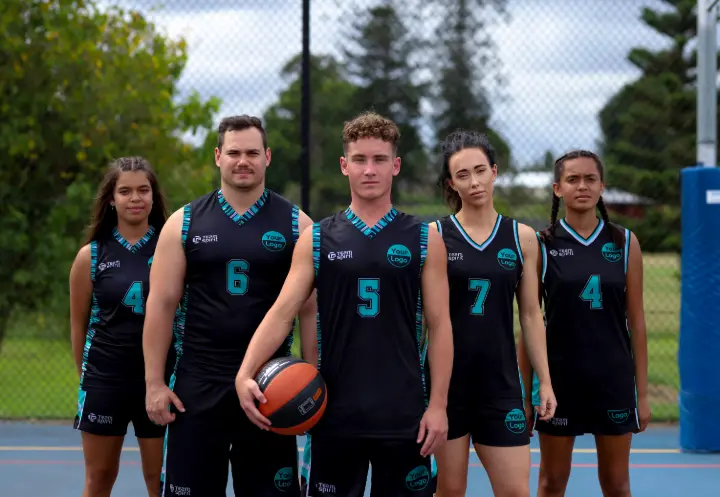
Building a Supportive Environment: The Role of the Tribe
No athlete is an island. Your social circle, your "tribe", plays a massive role in how to boost confidence in sports. Confidence can be contagious, but so can doubt.
Choosing Your Circle
Surround yourself with teammates and mentors who provide "Social Persuasion" (the third source of self-efficacy). A coach who provides constructive, growth-oriented feedback is worth their weight in gold. If you are a coach looking to build a more confident squad, consider how your communication style impacts your players' self-belief.
Leadership and Collective Efficacy
When the leaders of a team project calm, unshakable confidence, it trickles down to the youngest players. This is known as "Collective Efficacy." Building this group belief is a vital part of how to boost confidence in sports for schools and community clubs.
If you need help designing gear that symbolizes this unity, feel free to contact Team Spirit Sports to speak with our design specialists.
Overcoming the "Slump": Rescuing Confidence After Failure
Even the most confident athletes face slumps. The true test of how to boost confidence in sports is not how you act when you are winning, but how you rebuild when you are losing.
The 24-Hour Rule
Allow yourself 24 hours to grieve a loss or a poor performance. Analyze what went wrong, take the lessons, and then "flush it." Dwelling on past failures is the fastest way to erode your self-efficacy.
"Micro-Wins": The Path Back to Glory
When your confidence is shattered, don't try to win the championship in one day. Focus on "micro-wins":
- Winning a single sprint in training.
- Making 10 perfect passes in a row.
- Completing a full workout without complaining.
These small successes accumulate, slowly rebuilding your "past performance" bank and showing you how to boost confidence in sports through incremental progress.
Practical Checklist: How to Boost Confidence in Sports Daily
To make this actionable, here is a daily routine designed for the modern Australian athlete:
- Morning Visualization: Spend 5 minutes visualizing a perfect performance.
- Positive Priming: Watch highlights of your best plays or a player you admire.
- Instructional Cues: Write down three technical cues for your training session.
- Gear Prep: Ensure your TSS uniform is clean and ready. Treat it with respect.
- Post-Training Review: Write down three things you did well today. Focus on the "wins."
Consistency in these small habits is the most effective long-term strategy for how to boost confidence in sports.
Conclusion: Confidence Is a Choice
Ultimately, how to boost confidence in sports is a choice you make every day. It is a commitment to your preparation, a mastery of your internal monologue, and a pride in your presentation. While genetics and luck play a role in sports, self-belief is a variable you can control.
At Team Spirit Sports, we are proud to provide the "outer shell" of your confidence. We build the jerseys that hold your sweat, the jackets that keep you warm during the pre-game nerves, and the designs that symbolize your tribe. But the fire inside, the unshakable belief that you belong on that field, that comes from you.
Are you ready to step onto the field with a new level of self-belief?
Get a free quote for your team’s custom gear today: Contact Us
Visit our homepage to browse our 2026 collection: Team Spirit Sports
Frequently Asked Questions (FAQ)
Can a coach help in how to boost confidence in sports?
Yes, a coach is the primary source of "Social Persuasion." By providing specific, effort-based praise and setting realistic but challenging goals, a coach can significantly influence an athlete's self-efficacy.
Does "faking it until you make it" work in sports?
To an extent, yes. Using confident body language (standing tall, making eye contact) can actually lower cortisol and increase testosterone, making you feel more confident internally. This is a common "hack" in how to boost confidence in sports.
Is overconfidence dangerous?
Overconfidence can lead to a lack of preparation and a failure to respect the opponent. True athletic confidence is "Quiet Confidence", knowing you have done the work and are ready for the challenge, without underestimating the task.
How does professional gear affect a junior athlete?
For juniors, professional gear is a massive component of how to boost confidence in sports. It makes them feel "official" and serious about their hobby, which often leads to increased effort and better social bonding.
How do sports build friendships through confidence?
When athletes feel confident, they are more likely to communicate openly and support their teammates. This positive atmosphere is the perfect breeding ground for lifelong bonds.