
When it comes to school leavers hoodies or varsity jackets, few materials rival the comfort and versatility of fleece fabric. Soft, warm, and easy to care for, fleece has become the go-to choice for casual teamwear across Australia. Whether you’re designing a custom leavers hoodie for your graduating class or a varsity jacket for your club, understanding why fleece fabric performs so well helps you make the best decision for comfort, durability, and style.
In this article, we’ll explore what makes fleece fabric so popular, the different types available, and why it’s the perfect material for hoodies and jackets that look good and feel even better.
Key Takeaways
- Fleece fabric is a warm, soft, and durable material ideal for hoodies and varsity jackets.
- It offers excellent insulation without feeling heavy, making it perfect for cool Australian weather.
- The most common options are cotton fleece, polyester fleece, and blended fleece, each with unique benefits.
- Fleece is easy to decorate, whether through embroidery, printing, or appliqué patches.
- For long-lasting comfort, choose anti-pill or cotton–poly blends and wash gently in cold water.
- If sustainability matters, opt for recycled polyester fleece for a lower-impact choice.
What Is Fleece Fabric?
Fleece fabric is a soft, warm, and insulating textile, usually made from polyester or cotton–polyester blends. What makes it unique is the way the fibres are brushed to create a fluffy, plush surface on one or both sides. This texture traps air between the fibres, helping to retain body heat, similar to how natural wool works, but without the heaviness or itchiness.
Originally developed in the late 1970s as a synthetic alternative to wool, fleece quickly gained popularity for its warmth-to-weight ratio and its ability to dry quickly. Today, fleece is used not just in sportswear, but in everything from loungewear and outdoor jackets to blankets and accessories.
Key characteristics of fleece fabric:
- Lightweight yet warm
- Soft and comfortable against the skin
- Moisture-wicking and quick-drying
- Easy to wash and maintain
- Resistant to shrinking and wrinkling
Types of Fleece Fabric (and How They’re Used)
Not all fleece fabrics are created equal. Depending on the blend, weight, and finish, fleece can be fine-tuned for different purposes, from lightweight hoodies to heavy-duty outerwear. Below are some of the most common types used in apparel manufacturing, especially for hoodies and varsity jackets.
Read more: Bomber Jacket vs Varsity Jacket: Best Styles for Aussie Teams
1. Cotton Fleece
Cotton fleece is soft, breathable, and has a smooth outer surface with a plush interior. It’s ideal for leavers hoodies and everyday sweatshirts, providing a natural feel that remains comfortable even during long wear.
- Best for: Everyday wear, school hoodies, light jackets
- Pros: Breathable, comfortable, easy to print on
- Cons: May take longer to dry than synthetic options
2. Polyester Fleece
Made entirely from synthetic fibres, polyester fleece is durable, lightweight, and quick-drying. It’s perfect for teamwear that may need to endure repeated washing or outdoor use. It also retains warmth even in slightly damp conditions.
- Best for: Outdoor varsity jackets, active teamwear
- Pros: Excellent warmth retention, durable, low maintenance
- Cons: Less breathable than cotton
3. Blended Fleece (Cotton–Polyester Mix)
This is the most common choice for custom hoodies and jackets because it combines the best of both worlds, the comfort of cotton and the resilience of polyester. The blend usually sits around 65% cotton and 35% polyester, offering warmth, softness, and great print or embroidery compatibility.
- Best for: Custom leavers hoodies, printed hoodies, and jackets
- Pros: Balanced comfort and durability, resists shrinking, easy to decorate
- Cons: Slightly less natural feel than 100% cotton
4. Polar Fleece
Polar fleece is thicker and has a deep, fluffy nap that provides exceptional insulation. It’s often used as lining inside varsity jackets or as the main fabric for winter outerwear. Despite its thickness, it remains breathable and easy to care for.
- Best for: Jacket linings, warm outerwear
- Pros: Excellent warmth, soft feel, good for colder climates
- Cons: Can be too warm for year-round wear
5. Sweatshirt Fleece (Brushed Fleece)
Sweatshirt fleece, also called brushed back fleece, is the classic material used for hoodies, tracksuits, and sports pullovers. It has a smooth outer layer and a brushed inner surface, giving it that familiar soft, fuzzy texture.
- Best for: Hoodies, leavers pullovers, sports tops
- Pros: Comfortable, warm, and easy to customise
- Cons: Can pill over time with heavy use
Why Fleece Fabric Is Ideal for Hoodies and Varsity Jackets

Your hoodie or varsity jacket isn’t just about looks, it’s about comfort, function, and staying warm when it matters. Fleece fabric ticks every box, which is why it’s the preferred material for most custom leavers and teamwear designs.
1. Warmth Without the Weight
Fleece traps air within its brushed fibres, creating a natural insulating layer that keeps warmth close to your body. Unlike wool or heavy cotton, fleece provides exceptional thermal performance without feeling bulky, perfect for chilly mornings, school events, or outdoor training sessions.
2. Soft and Comfortable
The inner brushed finish gives fleece its signature soft feel. Whether worn over a T-shirt or layered under a jacket, it feels gentle on the skin and maintains comfort all day long.
3. Durable and Easy to Maintain
Fleece fabric holds up remarkably well over time. It resists pilling, stretching, and shrinking, even after countless washes. This makes it a reliable option for school or club apparel that’s worn frequently throughout the year.
4. Customisation Friendly
Fleece provides a stable, smooth surface that’s ideal for screen printing, embroidery, appliqué, or DTF transfers. Logos, names, and team patches hold their shape and colour well, allowing for creative designs that stand out.
5. All-Season Versatility
Although most people associate fleece with cold weather, its moisture-wicking properties also make it suitable for layering during cool spring and autumn days. The fabric’s breathability helps regulate body temperature, keeping wearers comfortable indoors and out.
Fleece vs Other Fabrics in Teamwear
If you’re deciding between different materials for your hoodie or jacket, it helps to know how fleece compares.
Fabric | Feel | Warmth | Durability | Best For |
Fleece | Soft, plush | High | Excellent | Hoodies, varsity jackets |
Cotton | Smooth, natural | Moderate | Moderate | T-shirts, polos |
Polyester | Slightly slick | Moderate | Excellent | Activewear, training kits |
Wool | Heavy, textured | Very high | Average | Outerwear, scarves |
French Terry | Loopback texture | Light–medium | Good | Lightweight sweatshirts |
In short: Fleece strikes the perfect balance between comfort, warmth, and durability, making it the smart choice for hoodies and varsity jackets that see daily use.
Customisation Options for Fleece Garments
One of the biggest advantages of using fleece for hoodies and jackets is its design versatility. Whether you’re creating school leavers apparel or branded teamwear, fleece handles multiple decoration techniques with ease.
Read more: Why Custom Leavers Hoodies are the Perfect Keepsake for Graduates
1. Embroidery
Fleece’s stable surface makes it ideal for embroidered logos and names. The dense texture holds stitches firmly, ensuring designs look crisp and long-lasting. Perfect for varsity-style initials or school crests.
Read more: Embroidery vs Screen Printing
2. Appliqué Patches
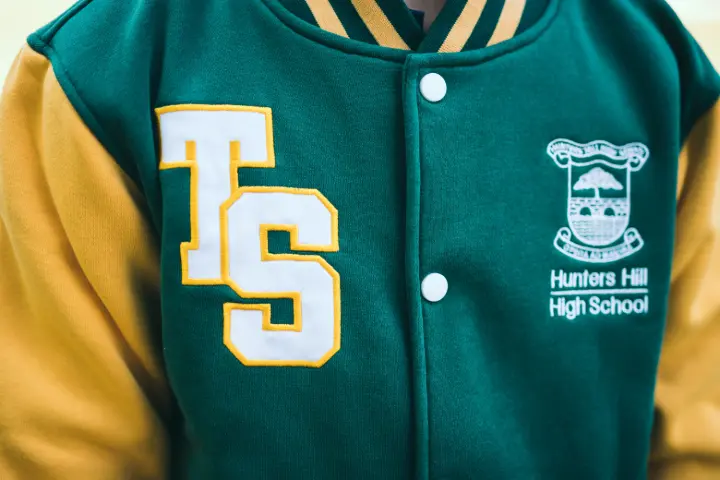
Appliqué is a classic choice for varsity jackets. With fleece fabric as a base, the patches attach smoothly and add a tactile, high-end finish that captures that collegiate style.
3. Printed Designs
Modern printing methods like DTF (Direct-to-Film) or screen printing work beautifully on blended fleece. They produce sharp, colourful results that resist fading over time.
4. Zippers, Linings, and Details
Fleece works well with metal or plastic zippers, contrast linings, and ribbed cuffs, giving you endless room for creative customisation. Many teams mix fleece with leather or satin sleeves in their varsity jackets for a signature look.
Care and Maintenance Tips for Fleece Fabric
To keep your fleece hoodie or jacket looking its best, proper care is key. Thankfully, fleece is low-maintenance compared to natural fabrics.
Washing:
- Use cold or warm water on a gentle cycle
- Avoid fabric softeners (they can clog fibres and reduce softness)
- Turn garments inside out to prevent pilling
Drying:
- Air dry for best results, or tumble dry on low heat
- Avoid direct sunlight for prolonged periods
Storage:
- Fold rather than hang heavy fleece garments to maintain shape
- Keep away from rough surfaces to prevent abrasion
Following these tips helps your custom fleece apparel stay soft, warm, and vibrant for years.
Fleece Fabric Drawbacks and What to Consider
While fleece fabric offers many benefits, it’s helpful to understand its limitations too:
- Less breathable than cotton: Can feel warm in hot weather
- Prone to static: Especially in dry environments
- Sustainability concerns: Synthetic fleece (polyester) is derived from plastic; however, many modern options are made from recycled PET bottles, reducing environmental impact
When choosing fleece for custom apparel, consider cotton–poly blends or recycled polyester fleece for a more eco-conscious choice.
Choosing the Right Fleece for Your Hoodie or Jacket

When selecting fleece fabric for your teamwear or school apparel, think about:
- Purpose: Is it for casual daily wear or outdoor activities?
- Climate: Lighter fleece for temperate regions, polar fleece for colder seasons
- Decoration type: Embroidery and appliqué look best on mid- to heavy-weight fleece
- Fit and style: Oversized hoodies and varsity jackets benefit from thicker fleece that holds structure
At Team Spirit Sports, our custom leavers hoodies and varsity jackets are designed with premium fleece options that balance warmth, softness, and durability, perfect for comfort and long-lasting wear.
Other Warm Fabrics to Consider Besides Fleece
If fleece isn’t the right fit for your design, there are other materials worth considering:
- Cotton French Terry: Lightweight and breathable for warmer climates
- Poly-cotton Jersey: Smooth and flexible for everyday wear
- Softshell Fabric: For weather-resistant team jackets
However, none quite match the comfort and warmth that fleece offers, especially for hoodies and jackets designed for cooler seasons.
The Last Word: What Makes Fleece Fabric So Popular
Fleece fabric continues to be a top choice for hoodies, leavers apparel, and varsity jackets because it blends comfort, durability, and warmth like no other material. From school leavers celebrating milestones to sports teams wanting cosy off-field gear, fleece provides the ideal foundation for personalised, high-quality garments.
If you’re looking to create your own custom hoodies or jackets, explore our range of custom varsity jackets and leavers hoodies at Team Spirit Sports, crafted for comfort, designed to last.
FAQs
1. What is fleece fabric made of?
Most fleece fabrics are made from polyester fibres, though some versions blend cotton and polyester for added softness and breathability. Modern fleece can also come from recycled materials, such as PET plastic bottles, making it a more sustainable option.
2. Is fleece fabric warm enough for winter?
Yes. Fleece is excellent for cold weather because its brushed texture traps warm air, creating natural insulation. Polar fleece and heavyweight sweatshirt fleece are especially good for winter hoodies and varsity jackets.
3. Does fleece shrink after washing?
Unlike cotton, fleece resists shrinking. Just make sure to wash it in cold or warm water and avoid high heat when drying to preserve its softness and structure.
4. Can fleece fabric be used for custom printing and embroidery?
Absolutely. Fleece provides a smooth and stable surface for decoration. It’s perfect for embroidery, screen printing, appliqué patches, or DTF printing, making it a top choice for custom hoodies and jackets.
5. Is fleece breathable?
Fleece is moderately breathable, not as airy as cotton but more than wool. It’s best suited for cool to cold climates, and many cotton-blend fleeces improve ventilation for everyday comfort.