
When choosing a team uniform, understanding the critical differences in the rugby vs soccer jerseys debate is essential for any player, coach, or club manager. While they may look similar, each is a specialised piece of equipment engineered for its sport. Choosing the wrong one can negatively impact performance, comfort, and how long the gear lasts. This guide provides clear answers, helping you select the perfect jersey that empowers your team to play at its best.
Key Takeaways
- Durability vs Breathability: The primary difference lies in their function. Rugby jerseys are built with heavy-duty fabrics and reinforced stitching to withstand extreme physical contact. Soccer jerseys prioritise lightweight, moisture-wicking materials for aerobic endurance and cooling.
- Fit Dictates Performance: Modern rugby jerseys are skin-tight to give opponents nothing to grab in a tackle. Soccer jerseys have a looser, athletic fit to maximise freedom of movement and airflow for players who run constantly.
- Material Science Matters: Soccer jerseys use advanced lightweight polyester to pull sweat away from the body. Rugby jerseys use tougher, tear-resistant polyester blends, often with elastane for stretch, to endure pulling and high-impact stress.
- Design with a Purpose: From reinforced, low-profile collars on rugby jerseys to lightweight V-necks on soccer tops, every design element is purpose-built for player safety, comfort, and on-field performance.
Rugby vs Soccer Jerseys: A Quick Comparison Table
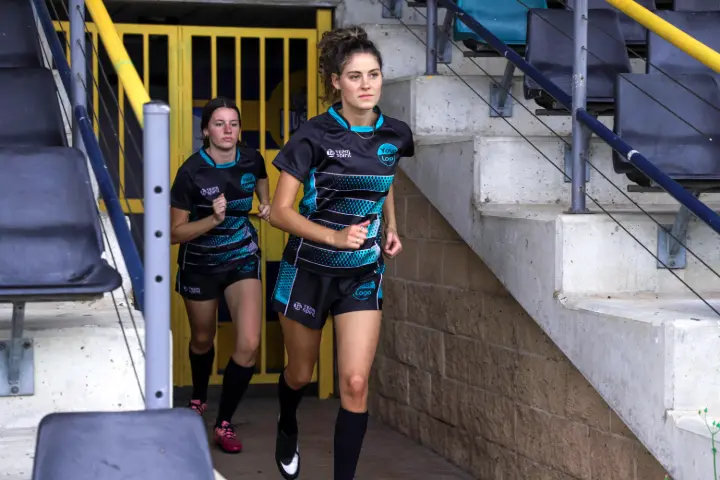
At first glance, rugby and soccer jerseys are simply team shirts. However, the unique demands of each sport have shaped them into highly specialised garments. Soccer is a game of continuous running, while rugby is a high-contact sport defined by tackling and scrums. These fundamental differences are woven into their design. This table provides a quick overview of the core distinctions.
| Feature | Soccer Jersey | Rugby Jersey |
|---|---|---|
Primary Function | Breathability, cooling, and freedom of movement | Extreme durability and tear resistance |
Fabric | Lightweight polyester with moisture-wicking technology | Heavy-duty polyester blend, often with elastane for stretch |
Fit | Athletic, slightly loose for airflow and agility | Skin-tight (modern) to prevent being grabbed in tackles |
Stitching | Standard stitching for lightweight construction | Reinforced, triple-stitched, or bar-tacked at stress points |
Collar | Soft crew neck or V-neck for maximum comfort | Reinforced, low-profile collar or traditional stiff collar |
Common Features | Mesh ventilation panels, quick-drying properties | Grip panels for ball carrying, reinforced plackets |
Why Fabric is the Biggest Difference: A Deep Dive
The fabric is the most important difference between rugby and soccer jerseys.
It affects comfort, durability, and performance during a match.
Soccer and rugby demand completely different physical actions, so their jerseys are designed with different priorities.
Soccer Jerseys: Engineered for Endurance
Soccer players can run over 10 kilometres in a single match, producing significant heat and sweat. Because of this, soccer jerseys focus on lightweight comfort and moisture control.
Most soccer jerseys are made from lightweight polyester performance fabrics designed to keep players cool.
Key features of soccer jersey fabrics:
- Lightweight materials to reduce fatigue during long matches
- Moisture-wicking technology that pulls sweat away from the skin
- Quick-drying fabric that helps players stay dry
- High breathability to regulate body temperature
These fabrics move moisture to the surface of the jersey where it evaporates quickly, helping players stay cool, dry, and comfortable for the full 90 minutes.
Rugby Jerseys: Engineered for Impact
Rugby jerseys face a very different challenge. During a match, players are tackled, pulled, and pushed in scrums and mauls, placing extreme stress on the fabric.
Because of this, rugby jerseys are designed to be strong, durable, and tear-resistant.
Key features of rugby jersey fabrics:
- Heavy-duty polyester blends for increased durability
- Thicker fabric construction that resists tearing
- Stretch fibres like elastane or spandex for flexibility
- Reinforced materials that handle constant pulling and contact
Unlike traditional cotton rugby shirts from the past, modern performance fabrics do not absorb large amounts of water, helping keep the jersey lighter throughout the match.
The goal of a rugby jersey fabric is clear: withstand intense physical contact while maintaining its shape and strength.
Fit for Purpose: How a Jersey’s Cut Affects Performance

The fit of a jersey is not just about appearance. It plays an important role in comfort, mobility, and performance during a match.
Because soccer and rugby involve very different movements, their jerseys are designed with different cuts.
The Athletic Fit of a Soccer Jersey
Soccer jerseys are designed with an athletic fit, meaning they sit close to the body without feeling restrictive.
This fit helps players move freely during the constant running and quick direction changes required in soccer.
Key characteristics of soccer jersey fit:
- Close but comfortable fit that allows full movement
- Flexible design for sprinting, jumping, and turning
- Slightly looser silhouette compared with rugby jerseys
- Better airflow between the fabric and skin for cooling
This balance between mobility and breathability helps players stay comfortable during long matches.
The Tactical Tight Fit of a Rugby Jersey
Modern rugby jerseys are typically much tighter than soccer jerseys. This is a deliberate design choice.
In rugby, players are constantly involved in tackles, scrums, and physical contests, where loose fabric could give opponents something to grab.
Key characteristics of rugby jersey fit:
- Tight “player fit” design that reduces fabric for opponents to grab
- Stretch fabrics that allow movement despite the tight fit
- Durable construction to handle pulling and contact
- Streamlined shape that stays secure during tackles
Some professional rugby jerseys also include grip textures on the chest or shoulders, helping players maintain better ball control, especially in wet conditions.
The result is a jersey designed not only for durability, but also to support performance in a highly physical sport.
Durability and Construction: A Tale of Two Sports
A team jersey is an investment, so it needs to last through a full season of matches, training, and washing.
However, rugby and soccer place very different stresses on uniforms, which is why their construction methods differ.
Soccer Jersey Durability: Built for the Season
Soccer jerseys are built to handle regular matches, training sessions, and frequent washing. Their construction focuses on maintaining comfort, shape, and colour quality throughout the season.
Key durability features of soccer jerseys:
- Strong but lightweight stitching suited for performance fabrics
- Durable polyester materials that resist wear from frequent use
- Colourfast printing and dyes that stay vibrant after many washes
- Flexible seams that support movement during play
While they are durable for soccer, these jerseys are not designed for heavy pulling or high-impact collisions.
Rugby Jersey Durability: Built for Collision
Rugby jerseys are built for a far more physical environment. During matches, jerseys are constantly pulled, stretched, and grabbed in tackles and scrums.
Because of this, durability is a top priority in their construction.
Key durability features of rugby jerseys:
- Heavy-duty fabrics designed to resist tearing
- Reinforced seams, often triple-stitched for extra strength
- Bar-tacked stress points at the shoulders, collar, and underarms
- Strong collars designed to handle repeated pulling
Every part of a rugby jersey is engineered to withstand contact and pressure throughout the match.
This reinforced construction helps the jersey survive the intensity of a full rugby season.
Key Design Features: Collars, Sleeves, and Team Identity

Beyond fabric and fit, design details also separate rugby jerseys from soccer jerseys. These elements influence comfort, durability, and how the jersey performs during play.
Soccer Jerseys: Simple and Lightweight Design
Soccer jerseys focus on simplicity and comfort to keep players light and mobile on the pitch.
Common design features include:
- V-neck or crew neck collars for comfort and flexibility
- Standard short sleeves that allow natural arm movement
- Lightweight construction to reduce heat and fatigue
- Minimal seams and bulk for a streamlined feel
The overall design supports speed, endurance, and long periods of running.
Rugby Jerseys: Reinforced for Contact
Rugby jerseys include extra design features to handle constant physical contact.
Typical rugby jersey features include:
- Low-profile reinforced collars that resist pulling
- Thicker cuffs or elasticated sleeves for a secure fit
- Stronger stitching around stress areas
- Tighter sleeve openings to prevent opponents from grabbing fabric
These elements help the jersey stay secure and durable during tackles and scrums.
Team Identity Still Matters in Both Sports
Even with their functional differences, both jerseys represent team identity and pride. Each uniform displays a club’s:
This is why choosing the right supplier is important.
Specialist providers like Team Spirit Sports use sublimation printing, where designs are infused directly into the fabric. This technique ensures:
- Logos and numbers won’t crack or peel
- The design does not add weight to the jersey
- Colours remain vibrant throughout the season
The result is a professional-looking uniform that performs well on the field while showcasing a team’s identity.
Built for the Game They Play
Rugby and soccer jerseys may look similar at first glance, but they are designed for very different demands on the field. Soccer jerseys focus on lightweight fabrics, breathability, and freedom of movement, while rugby jerseys prioritise strength, durability, and a tight fit that can withstand physical contact.
Understanding these differences helps teams choose uniforms that truly match the physical requirements of their sport. For teams looking to create high-quality custom kits that combine performance, durability, and strong team identity, Team Spirit Sports offers professionally designed teamwear built for competition.
Ready to design your team’s next kit?
Contact Team Spirit Sports today to discuss your custom rugby or soccer uniforms and bring your team’s identity to life with performance-driven sportswear.
Frequently Asked Questions (FAQs)
1. What happens if you wear a rugby jersey to play soccer?
While you can, it's not a good idea. A rugby jersey would feel very heavy, hot, and restrictive for the constant running in soccer. Its thick fabric doesn't wick sweat well, which would make you uncomfortable and weigh you down, affecting your performance.
2. Why are modern rugby jerseys so tight?
The tight fit is a tactical advantage. It stops opponents from getting a grip on the jersey during a tackle, making the player much harder to pull down. The durable, stretchy fabric allows for this skin-tight fit without tearing or restricting the player's movement.
3. What's better, a soccer jersey or a rugby jersey for the gym?
For general gym workouts, a soccer jersey is a much better choice. Its lightweight, breathable, and moisture-wicking properties are ideal for activities like running, cycling, or lifting weights, keeping you cool and comfortable. A rugby jersey would be too heavy and warm.
4. What is sublimation printing and why is it used for team jerseys?
Sublimation is a printing process where dye is heat-transferred directly into the fabric, becoming a permanent part of the material. It's ideal for sports jerseys because the design won't crack, peel, or fade. Crucially, it doesn't add weight or block the fabric's pores, maintaining 100% of its breathability and performance qualities.
5. How do you properly wash a custom sports jersey?
To make your jersey last longer, wash it inside-out in cold water with similar colours. Avoid fabric softeners, as they can clog the pores of performance fabrics and reduce their ability to wick moisture. Always hang it to dry instead of using a machine dryer, as high heat can damage the fabric and logos.